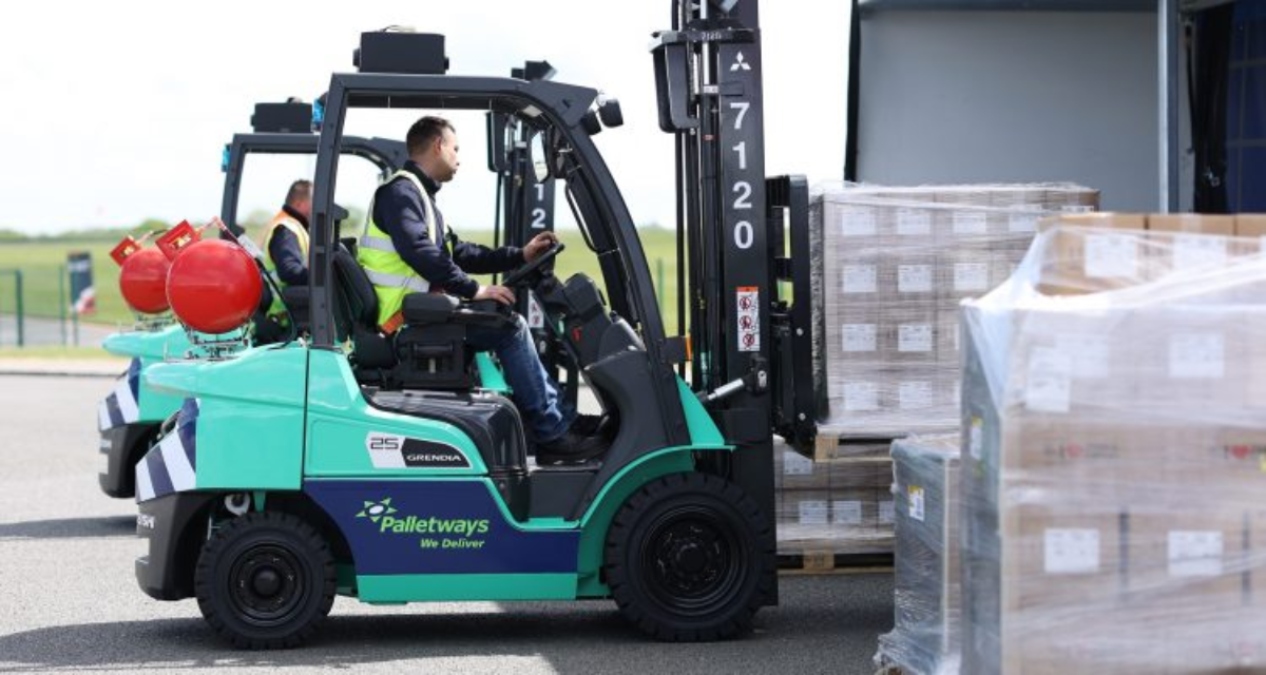

Forklift trucks are a staple of warehouse operations, but what happens when they need to go beyond the site gate? Whether you’re transporting materials between nearby depots, or making a short journey to a customer’s premises, UK law has specific rules around when and how a forklift can legally be used on public roads.
If your business operates forklifts and occasionally works on public roads, here are facts to familiarise yourself with to ensure you stay compliant.
When Should a Forklift Be Paying Taxes?
In Britain, you are liable to pay road tax if your forklift takes you more than 1000 yards on a public road in a single trip. That doesn’t matter whether you are driving on a big Class A motorway or on smaller-routed B or C roads. When you exceed that distance, your forklift must be registered at the DVLA, insured, and taxed as any other vehicle is.
In the case of forklifts, you may not have to pay tax at all if only on privately owned land or short trips that are under the 1000-yard limit. However, to be safe you should always consult DVLA.
What are the Legal Requirements for Using Roads?
Placing a forklift on a public highway isn’t necessarily about taxes. There are several other requirements under the law to protect your operators as well as other people on the road:
DVLA Registration – Road-based forklifts are required to be registered and fitted with conspicuous number plates.
Insurance – Obtain a proper road-use insurance policy.
Lighting & Reflectors – These are needed if you are shooting under limited light or poor visibility conditions.
Speed Limits – The forklifts are typically limited to around 12 mph and should never pose a threat to traffic flow.
Driver Licensing – The operator needs a valid UK driving licence and must be certified to use the forklift safely and competently.
These are rules you can’t bend when your gear is on wheels, especially in heavily trafficked locations or at multiple sites.
How Much Can a Forklift Legally Travel?
It is lawful to drive forklifts up to 1000 yards (almost exactly 1km) on the high street at normal driving speeds without tax and registration requirements. This is convenient for short internal shifts, such as visiting nearby warehouses. However, once you pass that distance, the forklift itself is considered a commercially taxable road vehicle and subject to all of the standards of the law.
How to Register a Forklift for Road Use
If you need your forklift to be street-licensed, you’ll need to:
- Register it with the DVLA
- Guarantee that they are safe on roads (tyres, brakes, mirrors and visibility)
- Secure the appropriate insurance policy
- Pay road tax if you are over the 1000-yard exemption
Moffett Deliveries
Instead of adapting forklifts for occasional use on roads, companies are increasingly considering Moffett-mounted forklifts, a portable solution that follows your consignment and discharges effortlessly at the site. It is appropriate for companies that need to be flexible without all the trouble of getting conventional forklifts onto the roads legally.
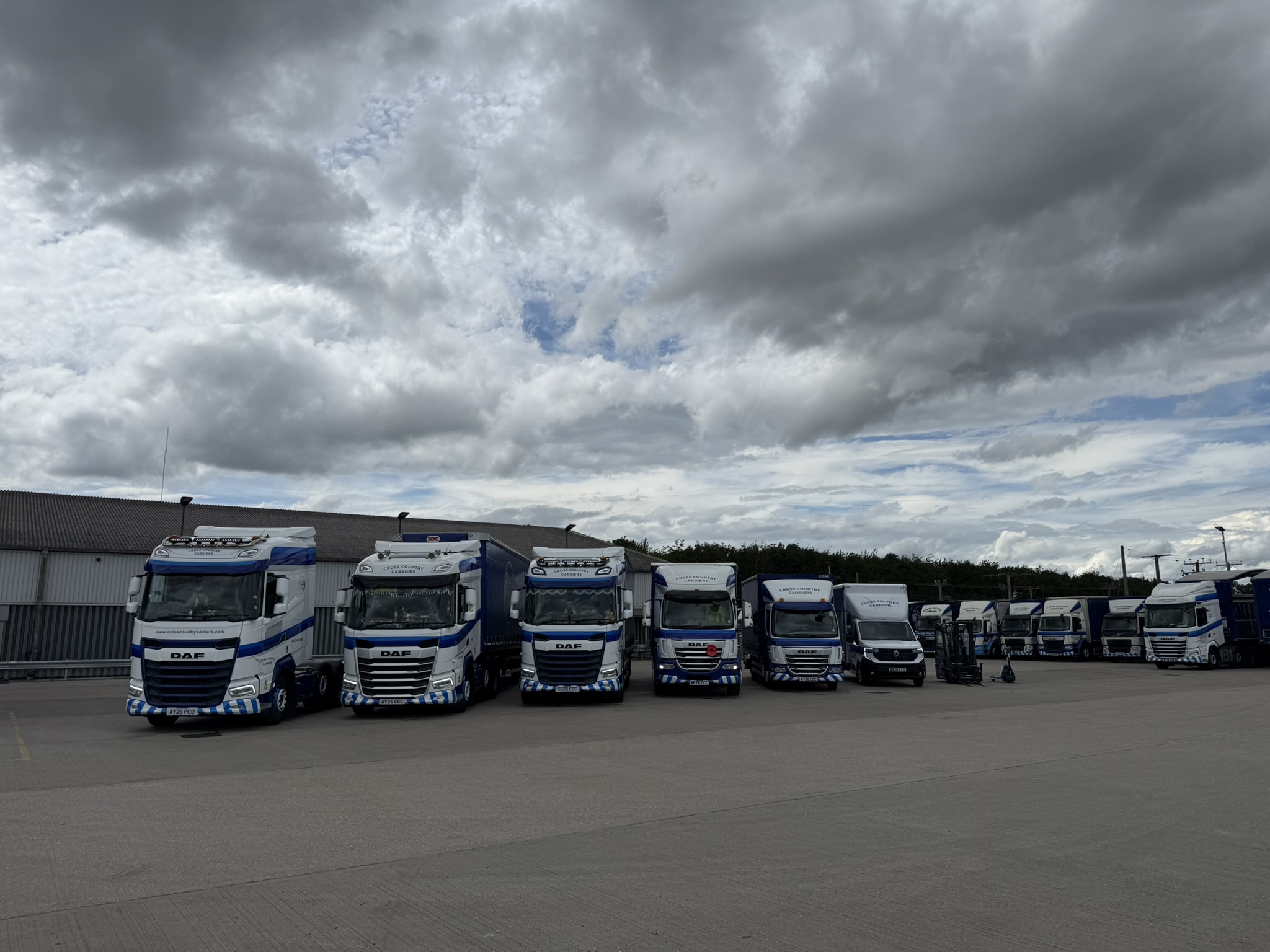
Cross Country Carriers has been successfully providing logistics solutions for a range of businesses for over 47 years. Our Moffett forklift option gives us the flexibility to deliver, even in more challenging areas. For more information about our services, get in touch with our friendly team.