Getting a load onto a pallet is only half the job. How that pallet is positioned, wrapped and secured inside the trailer matters just as much, both for road safety and for making sure goods arrive in the condition they left in. Here’s a straightforward look at what proper load securing involves, and why it’s something we take seriously on every job.
Where Should Palletised Goods Be Loaded?
Placement within the trailer isn’t just a matter of convenience. Heavier pallets need to go on the main deck or the swan neck of a curtain-sided double-deck trailer rather than the upper deck, keeping weight distributed safely and reducing the risk of instability once the vehicle is moving.
Keeping the Right Gaps
Spacing within the trailer is tightly regulated for good reason. The gap between the front of the load and the headboard shouldn’t exceed 30cm, and the same limit applies to the gap between the load and the rear doors. Along the sides, the gap between the load and the curtain should be no more than 8cm on either side. Keeping within these margins limits how much a load can shift in transit, which is exactly what stops a stable pallet becoming a hazard.
Securing the Load Itself
Before a pallet even reaches the trailer, the goods on it need to be properly fixed using shrink wrap or banding. A load has to be stable on the pallet before it’s loaded, since no amount of strapping in the trailer can correct a load that wasn’t secure to begin with. Where pallets are stacked, that stack needs to stand stable on its own, without relying on straps to hold it together.
Straps, Nets and Weight Limits
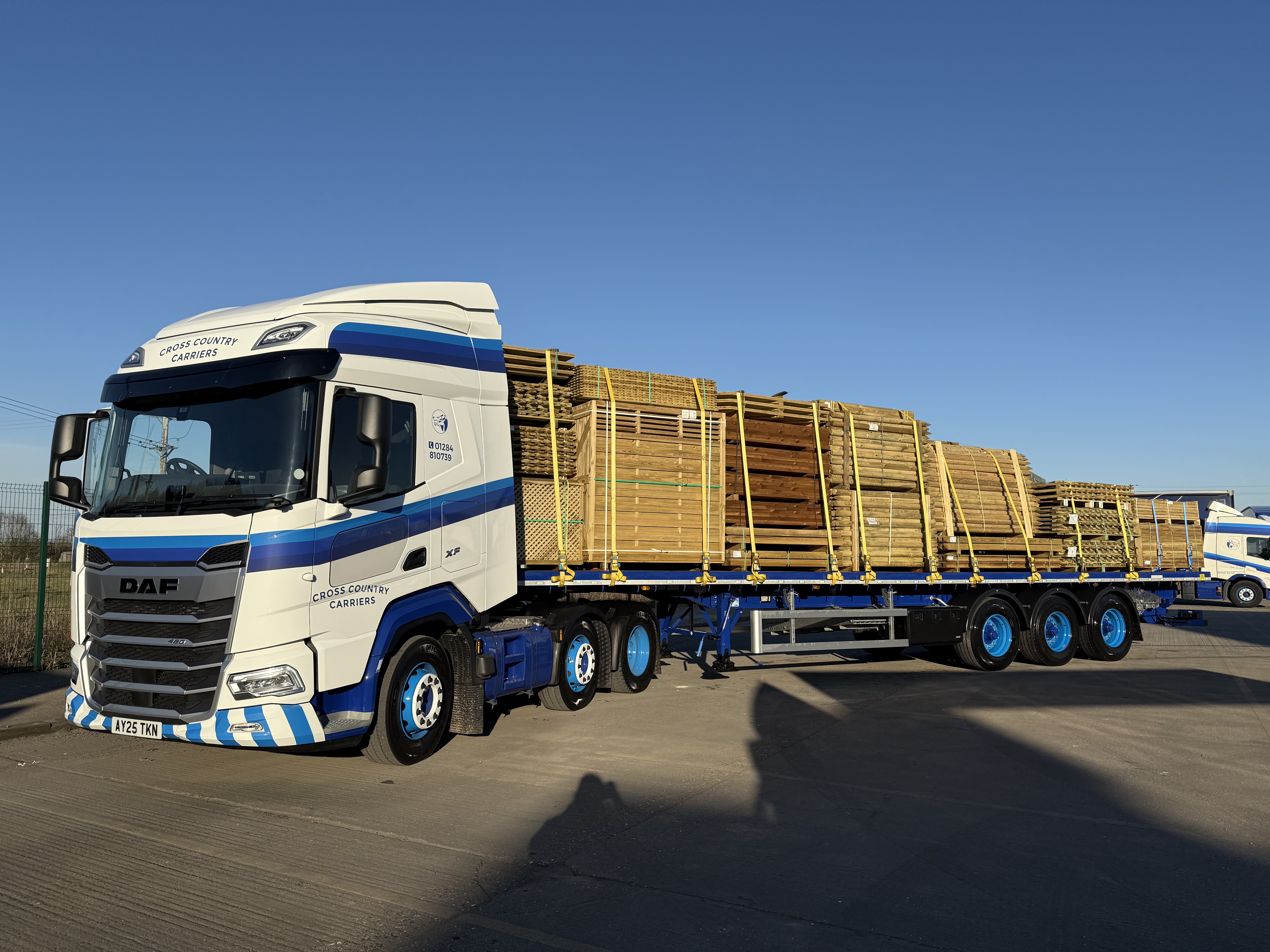
For individual pallets or stacks under 400kg, buckle straps or internal nets hung from the roof rails of a curtain-sided trailer are generally sufficient. Anything heavier than that needs a different approach, as straps alone aren’t considered adequate for securing loads over 400kg. Current guidance favours pairing an internal curtain with a strap arrangement rather than relying on straps in isolation, giving an extra layer of security for heavier freight.
As a general rule, pallets should be single-stacked wherever possible, kept within the loading guidelines above, and have any internal straps properly engaged before the vehicle sets off.
Why This Matters at Cross Country Carriers
Load securing sits right at the heart of what we do. Our compliance and training team make sure these standards are second nature to every driver, and it’s part of why we’re able to maintain our FORS Silver accreditation. Getting this right protects our drivers, other road users, and the goods we’ve been trusted to deliver.
If you’d like to know more about how we handle palletised freight, get in touch with our team today.